
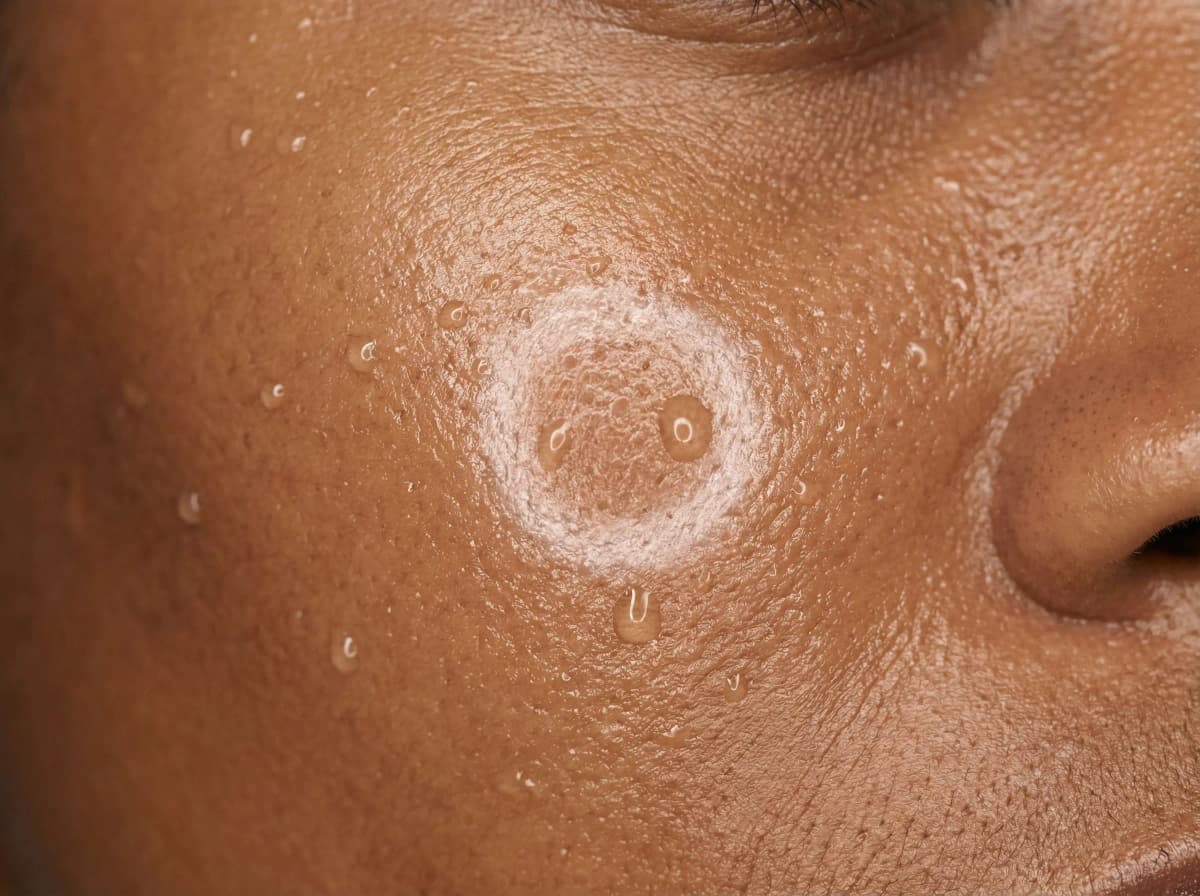
Dermatology
Dermatologist in Lalitpur, Kathmandu Valley
Dermatology (skin, hair and nail care, known in Nepali as छाला रोग, Chhala Rog) is available at Tulsi Multi Speciality Clinic, AVM Chowk, Manbhawan, Lalitpur (Patan), Kathmandu Valley. Dermatologist Dr. Kavita Pokhrel (MD Dermatology, NMC No. 18466) sees any skin problem, as well as hair and nail problems, Sunday to Friday from 6:30 PM. Autoimmune skin conditions are a particular focus. She also treats acne, melasma and pigmentation, hair fall, fungal infections such as ringworm (दाद), eczema, psoriasis and skin allergies, and offers GFC, PRP and HydraFacial procedures.
At a Glance
Dermatologist in Lalitpur (Patan), Kathmandu Valley: Dr. Kavita Pokhrel (MD Dermatology, NMC 18466) sees any skin, hair or nail problem, Sun–Fri from 6:30 PM.
What to Expect
Your consultation with Dr. Kavita Pokhrel starts with a private conversation about your skin, hair or nail problem: when it started, what makes it better or worse, and every cream, soap or medicine you have already tried. She then examines the affected skin, hair or nails. You leave with a diagnosis, or a plan to reach one, clear instructions for your treatment, and a date to come back if follow-up is needed.
Benefits
- Diagnosis and treatment of any skin problem, and of hair and nail problems (छाला रोग), by a dermatologist
- A particular focus on autoimmune skin conditions
- Long-term management of eczema, psoriasis and repeated fungal infections (दाद)
- Treatment for acne and acne scars, melasma and dark patches
- Procedures at the clinic: GFC, PRP and HydraFacial
- Consultations Sunday to Friday from 6:30 PM; please book ahead
- Care from a dermatologist with an MD in Dermatology, registered with the Nepal Medical Council (NMC No. 18466)
- Consultation fee NPR 900
- Patients outside the Kathmandu Valley can ask about an online consultation when booking
- At AVM Chowk, Manbhawan, Lalitpur, near Lagankhel and Patan Hospital
How to Prepare
- Bring every cream, ointment or medicine you have used on the skin, or a clear photo of its label
- Come with clean skin — avoid makeup, sunscreen, lotion, or skincare products on the affected area on the day of your appointment
- Make a list of all skincare and haircare products you're currently using (cleansers, creams, serums, oils, hair products)
- Bring a list of all oral and topical medications, including supplements and home remedies
- Note when your skin or hair concern started, what triggers it, and what has made it better or worse
- For hair concerns: avoid hair oil or styling products on the day of consultation
- For pigmentation or sun-related issues: avoid heavy sun exposure 24–48 hours before your visit
- Take clear photographs of past flare-ups or how the condition looked at its worst
- Bring previous prescriptions, reports, or test results from other dermatologists
- Wear comfortable, loose clothing that allows easy examination of affected areas
- Note any family history of skin conditions, allergies, eczema, psoriasis, or hair loss
- Before a GFC, PRP or HydraFacial session, follow any instructions Dr. Kavita Pokhrel gives you
Frequently Asked Questions
A dermatologist: a medical doctor who specialises in conditions of the skin, hair and nails. At Tulsi Multi Speciality Clinic in Manbhawan, Lalitpur, skin patients see dermatologist Dr. Kavita Pokhrel (MD Dermatology, NMC No. 18466), Sunday to Friday from 6:30 PM.
Yes. Tulsi Multi Speciality Clinic is at AVM Chowk, Manbhawan, Lalitpur-5, Lalitpur (Patan), near Lagankhel and Patan Hospital. Female dermatologist Dr. Kavita Pokhrel consults there Sunday to Friday from 6:30 PM until the clinic closes; please book ahead. The clinic is closed on Saturdays. The contact page has the map and directions.
The dermatology consultation fee at Tulsi Multi Speciality Clinic is NPR 900 (September 2026). The clinic accepts cash, bank transfer or Fonepay (QR).
Choose a dermatologist, a doctor who specialises in skin, hair and nails, who is registered with the Nepal Medical Council; every doctor has an NMC number. Ask about the doctor's dermatology qualification, check that the consultation times suit you, and read recent Google reviews. At Tulsi Multi Speciality Clinic, skin patients see Dr. Kavita Pokhrel (MD Dermatology, NMC No. 18466), Sunday to Friday from 6:30 PM, for NPR 900. The clinic as a whole is rated 5.0 on Google from more than 300 reviews across all its services (September 2026).
Dr. Kavita Pokhrel sees any skin problem (छाला रोग), as well as hair and nail problems. Autoimmune skin conditions are a particular focus. Examples of what she treats: acne and acne scars; melasma and dark patches; hair fall and dandruff; fungal infections such as ringworm (दाद), jock itch, athlete's foot and tinea versicolor; eczema; psoriasis; skin allergies and hives (urticaria); vitiligo; warts; moles and skin growths; and nail problems. She also offers three procedures at the clinic: GFC, PRP and HydraFacial.
Chhala Rog (छाला रोग) is the everyday Nepali term for skin diseases, including acne, eczema, psoriasis, fungal infections, allergies, pigmentation, and hair or nail problems. See a dermatologist if you have acne with deep, painful spots or scars, hair loss that worries you, or a mole that changes size, shape or colour. Creams bought without a prescription, especially steroid mixture creams, can make some conditions such as fungal infections worse. At Tulsi Multi Speciality Clinic in Lalitpur, dermatologist Dr. Kavita Pokhrel sees skin, hair and nail problems Sunday to Friday from 6:30 PM.
Yes. Dermatologists in Nepal estimate that about 4.4% of people have a dermatophyte fungal infection, the group that includes ringworm (दाद), and these fungi thrive in warm, humid weather. They are treated with antifungal medicine used for the full course, and steroid mixture creams sold without a prescription can make them spread and harder to treat.
In a year-long study of visits to one hospital's skin clinic in Kathmandu (1999 data, published in 2006), the three most common diagnoses were fungal infections, acne and melasma. It is an old, single-hospital study, so treat it as a rough guide. Dermatologists in Nepal estimate that about 4.4% of people have a dermatophyte fungal infection such as ringworm (दाद).
Yes. "Skin doctor" is the everyday name for a dermatologist. A dermatologist is a medical doctor who specialises in conditions of the skin, hair and nails, and treats patients of all ages.
Acne can range from mild, with a few spots, to severe, with deep, painful lumps under the skin. For mild acne, wash twice a day with a gentle cleanser and try a treatment you put on the skin, such as salicylic acid or benzoyl peroxide; a pharmacist can advise. See a doctor if it is not getting better, if the spots are deep, painful or causing scars, or if it is affecting your mental health. Prescription treatments are stronger and can be very effective for more severe acne: creams or gels (retinoids or antibiotics) and tablets (antibiotics, the combined pill or isotretinoin). Do not pick or squeeze spots, because this can cause scars. How soon results show depends on the treatment; Dr. Kavita Pokhrel explains what to expect for yours.
Melasma causes patches and spots, usually on the face, that are darker than your natural skin tone. It is most common in women, especially women with medium to dark skin tones, and it often first appears during pregnancy or on starting birth control pills. It may go away on its own, but it can also last for years; treatment can sometimes help, and dermatologists recommend treating it sooner rather than later. Sun protection can help fade melasma and prevent it from returning.
It is normal to lose between 50 and 100 hairs a day, often without noticing. Hair loss can be temporary, for example after an illness, stress, weight loss or iron deficiency, or permanent, like male and female pattern baldness, which usually runs in the family. Hair loss caused by a medical condition usually stops or grows back once you have recovered. Treatment depends on the cause. Minoxidil is used for male and female pattern baldness, and finasteride for men only; neither works for everyone, and they work only for as long as they are used. See a doctor to find the cause before going to a commercial hair clinic.
Dandruff causes white flakes of skin on the scalp and in the hair, and the scalp may feel dry and itchy; it is common, it is not harmful, and you cannot catch it. It is not caused by poor hygiene: it may be caused by a yeast that naturally lives on the skin or by skin conditions such as eczema, and stress and cold weather can make it worse. Anti-dandruff shampoos contain ingredients such as ketoconazole, coal tar or salicylic acid; use one for up to 4 weeks to see if it helps. See a dermatologist if it has not improved after 4 weeks, if it is bad or very itchy, if your scalp is red or swollen, or if you have flaky, itchy patches on your face or body: these can be signs of another condition such as seborrhoeic dermatitis, psoriasis or scalp ringworm.
Both cause itchy skin, but they are different conditions. Atopic eczema can make the skin itchy, dry, cracked, crusty, scaly or thickened; it is most common in young children, and it is common on the elbows, knees and hands, and on the face in babies and toddlers. Psoriasis causes dry, itchy, sore, flaky patches that look like silvery-white scales (grey on brown or black skin), mostly on the head and behind the ears, the chest, tummy and back, the forearms and elbows, and the lower legs and knees; it is thought to be caused by a problem with the immune system, and it is not contagious. Some people with psoriasis also get psoriatic arthritis, for which doctors refer people to a rheumatologist; at Tulsi Multi Speciality Clinic, dermatologist Dr. Kavita Pokhrel and rheumatologist Dr. Krishna Adhikari consult in the same clinic.
Be careful with skin-lightening (fairness) creams bought without a prescription. The World Health Organization calls skin lightening "a dangerous practice often associated with the risk of exposure to mercury salts", and says mercury-containing skin-lightening products are hazardous to health and banned in many countries. Steroid creams are also misused on the face in Nepal: in a study at a Kathmandu teaching hospital's skin clinic, melasma was the second most common reason for steroid-cream misuse, after fungal infections. For dark patches or uneven skin tone, see a dermatologist before using any cream, and protect your skin from the sun, which can help fade melasma and prevent it from returning.
Dermatologists care for patients of all ages, from newborns upwards. If your child has a skin, hair or nail problem, call the clinic on +977-1-5914294 or message it on WhatsApp at +977 9767925191 to ask about an appointment.
Most harmless moles are round or oval with a smooth edge; they can be flat or raised, and they are usually darker on brown and black skin. A mole can be a sign of melanoma, a type of skin cancer, if it changes colour or has more than 2 colours, has uneven edges, or bleeds, itches, or becomes crusty or raised. See a doctor if a mole changes size, shape or colour, is painful, itchy, inflamed, bleeding or crusty, or if a new or unusual mark on your skin has not gone away after a few weeks. Finding a melanoma as early as possible can mean it is easier to treat.
Protect your skin from the sun. When the UV index is 3 or higher, use a sunscreen with SPF 30 or more and at least 4-star UVA protection, use enough and re-apply it often, and do not rely on sunscreen alone: wear suitable clothing and stay in the shade when the sun is strongest. Sun protection also helps fade melasma and stop it coming back. If your skin is prone to acne, wash twice a day with a gentle cleanser, use non-comedogenic products (they do not clog pores) and do not scrub.
Book online on this website, call +977-1-5914294, or message the clinic on WhatsApp at +977 9767925191. Dr. Kavita Pokhrel consults Sunday to Friday from 6:30 PM; the clinic is closed on Saturdays. The consultation fee is NPR 900, paid by cash, bank transfer or Fonepay (QR). Patients outside the Kathmandu Valley can ask about an online consultation when booking.
Dermatology at Tulsi Multi Speciality Clinic is provided by consultant dermatologist Dr. Kavita Pokhrel, who holds an MBBS and an MD in Dermatology and is registered with the Nepal Medical Council (NMC No. 18466).
Dermatology consultations with Dr. Kavita Pokhrel are in Nepali and English.
Dermatology (skin, hair and nail care, known in Nepali as छाला रोग, Chhala Rog) is available at Tulsi Multi Speciality Clinic, AVM Chowk, Manbhawan, Lalitpur (Patan), Kathmandu Valley. Dermatologist Dr. Kavita Pokhrel (MD Dermatology, NMC No. 18466) sees any skin problem, as well as hair and nail problems, Sunday to Friday from 6:30 PM. Autoimmune skin conditions are a particular focus. She also treats acne, melasma and pigmentation, hair fall, fungal infections such as ringworm (दाद), eczema, psoriasis and skin allergies, and offers GFC, PRP and HydraFacial procedures.
Your consultation with Dr. Kavita Pokhrel starts with a private conversation about your skin, hair or nail problem: when it started, what makes it better or worse, and every cream, soap or medicine you have already tried. She then examines the affected skin, hair or nails. You leave with a diagnosis, or a plan to reach one, clear instructions for your treatment, and a date to come back if follow-up is needed.
- Bring every cream, ointment or medicine you have used on the skin, or a clear photo of its label
- Come with clean skin — avoid makeup, sunscreen, lotion, or skincare products on the affected area on the day of your appointment
- Make a list of all skincare and haircare products you're currently using (cleansers, creams, serums, oils, hair products)
- Bring a list of all oral and topical medications, including supplements and home remedies
- Note when your skin or hair concern started, what triggers it, and what has made it better or worse
- For hair concerns: avoid hair oil or styling products on the day of consultation
- For pigmentation or sun-related issues: avoid heavy sun exposure 24–48 hours before your visit
- Take clear photographs of past flare-ups or how the condition looked at its worst
- Bring previous prescriptions, reports, or test results from other dermatologists
- Wear comfortable, loose clothing that allows easy examination of affected areas
- Note any family history of skin conditions, allergies, eczema, psoriasis, or hair loss
- Before a GFC, PRP or HydraFacial session, follow any instructions Dr. Kavita Pokhrel gives you
Dr. Kavita Pokhrel will tell you whether and when to come back, depending on your condition and your treatment. Use each medicine for as long as prescribed, even if your skin looks better: fungal infections in particular can come back when treatment is stopped early. Message the clinic on WhatsApp at +977 9767925191 if your skin gets worse or you react to a medicine.
Dermatology is provided by Dr. Kavita Pokhrel (MBBS, MD (Dermatology)). All doctors at Tulsi Multi Speciality Clinic are registered with the Nepal Medical Council (NMC).