
Connective Tissue Disorders: Sjögren's, Scleroderma, Raynaud's
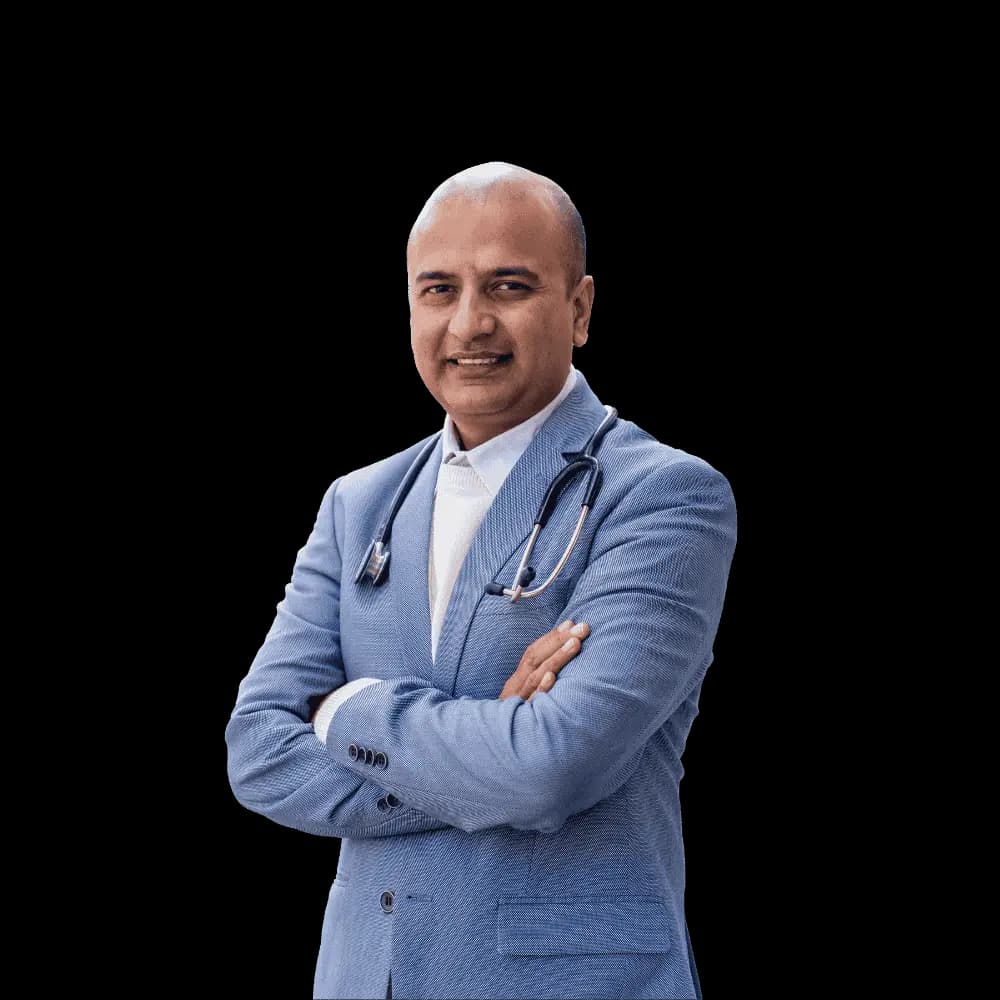
By Dr. Krishna Adhikari, Consultant Rheumatologist
MBBS, MD (Internal Medicine), Fellowship in Clinical Rheumatology
Awaiting medical review: this new article has not yet been checked by Dr. Krishna Adhikari. It will be updated after his review.
Connective tissue disorders affect the tissue that supports and shapes the body, such as the skin, eyes and heart (MedlinePlus). Three conditions that a rheumatologist treats are Sjögren's syndrome (स्जोग्रेन्स सिन्ड्रोम), which dries the eyes and mouth; scleroderma (स्क्लेरोडर्मा, also called छाला कडा हुने बाथ), which can harden the skin; and Raynaud's phenomenon (Raynaud रोग), where fingers and toes turn white, blue and then red in the cold. Raynaud's is a reaction of the blood vessels, but it can be an early sign of scleroderma and can occur with Sjögren's, so it is covered too.
What are connective tissue disorders, and why do they sit with a rheumatologist?
Connective tissue works like "cellular glue", and more than 200 disorders affect it: genetic ones such as Marfan syndrome, autoimmune ones such as lupus and scleroderma, and some cancers (MedlinePlus). The autoimmune ones usually sit with a rheumatologist, because rheumatologists treat diseases of the joints, muscles and bones and are specialists in autoimmune diseases (NIAMS, part of the US National Institutes of Health). About half the time, Sjögren's occurs with another autoimmune connective tissue disease (Sjögren's Foundation). In Nepali, scleroderma is a kind of बाथ रोग (Nepali Health); see our guide to bath rog.
What is Sjögren's syndrome (स्जोग्रेन्स सिन्ड्रोम)?
Sjögren's syndrome, also called Sjögren's disease, is a long-lasting autoimmune condition in which the immune system attacks the glands that make tears and saliva (NIAMS; NHS). Nepali health pages and videos write the name as स्जोग्रेन्स सिन्ड्रोम or स्जोग्रेन्स रोग, and describe मुख सुख्खा र आँखा सुख्खा (dry mouth and dry eyes).
Symptoms and who gets it. Dry eyes that burn, itch or feel sandy; a dry mouth that makes swallowing, speaking and tasting harder and can lead to tooth decay; tiredness; joint and muscle pain. Most people with it are women; it can start at any age but is most common in the 40s and 50s. It can occur alone or alongside rheumatoid arthritis, lupus or Raynaud's phenomenon (NIAMS).
Tests. There is no single test. Doctors may measure tear and saliva production, test the blood for antibodies (including rheumatoid factor, says the American College of Rheumatology, ACR) and sometimes biopsy the salivary glands. The antibodies also occur in some healthy people, so a blood test alone cannot diagnose it (NIAMS).
Care. There is no cure; treatment relieves symptoms and prevents complications, using self-care (sipping water, sugar-free gum, regular dental visits) and medicines. Some medicines worsen dryness, so tell your doctor what you take (NIAMS). Most people live into old age with a normal life expectancy (NHS).
Warning signs. NIAMS lists numbness, tingling, weakness and shortness of breath among its wider effects, which can involve the lungs, kidneys and nervous system, so tell your doctor about them. Burning, soreness or white patches in the mouth can mean thrush, a fungal infection to show your doctor or dentist (NIAMS). The chance of lymphoma (a cancer of the lymph glands) is raised but low (NIAMS; NHS); ACR advises regular follow-up with a rheumatologist to monitor for complications.
Dryness is the usual picture, but a 2024 case report in the Journal of the Nepal Medical Association describes a rarer one: a 40-year-old woman with generalised weakness, shortness of breath and severe hypokalaemia (very low blood potassium), diagnosed with Sjögren's syndrome from her blood antibody (serology) profile. Dr. Krishna Adhikari is one of its three authors (JNMA record; see his profile).
What is scleroderma (स्क्लेरोडर्मा), and what does CREST mean?
Scleroderma means "hard skin" (MedlinePlus): an overactive immune system makes connective tissue produce too much collagen, which thickens and scars it (NHS). Localised scleroderma (morphoea) mostly affects the skin; systemic sclerosis, the more serious type, can also affect blood vessels, heart, lungs and kidneys, in limited or diffuse forms (NIAMS; NHS). "Limited" does not mean safe: progression is slower, but a risk of high blood pressure in the lung arteries remains, especially later on (DermNet). Limited systemic sclerosis used to be called CREST syndrome, after five features (DermNet):
Calcinosis: small white lumps of calcium under the skin.
Raynaud's phenomenon.
Esophageal dysmotility: problems with the oesophagus (food pipe), such as heartburn and trouble swallowing.
Sclerodactyly: thickened, tight skin on the fingers.
Telangiectasia: small widened blood vessels on the face or at the base of the fingernails (DermNet; MedlinePlus; NHS).
Symptoms and who gets it. Raynaud's is often an early sign (ACR). Others include thick, tight skin on the fingers, tiredness, joint pain and stiffness, heartburn, trouble swallowing and shortness of breath (MedlinePlus). It is rare (ACR), affects women more than men, and usually appears between 30 and 50 (NIAMS; NHS).
Tests. There is no single test, and antibody blood tests cannot diagnose it alone. The doctor examines the skin and may use blood tests (for antibodies, and for inflammation such as ESR and CRP), a skin biopsy, a lung CT scan, an echocardiogram (heart ultrasound), lung function tests and a magnified look at the base of the fingernails (NIAMS; MedlinePlus).
Care. There is no cure, but treatment can control symptoms and limit damage (MedlinePlus). The team may include a rheumatologist, a dermatologist and lung, heart or kidney specialists, with medicines that calm the immune system and improve circulation, physiotherapy and regular blood pressure and lung checks (NHS; NIAMS).
Warning signs. Tiredness, shortness of breath, a dry cough, trouble breathing or swollen feet can point to lung disease (NIAMS). Scleroderma renal crisis is uncommon but serious: blood pressure rises suddenly and kidney failure can follow quickly. Check your blood pressure regularly; if it is higher than usual, call your doctor right away (NIAMS). Side effects of some medicines, such as corticosteroids, can trigger it (NIAMS), so do not stop any regular medicine without asking your doctor first (Arthritis UK). Fingertip ulcers can lead to loss of the fingertip (DermNet).
What is Raynaud's phenomenon (Raynaud रोग)?
It is an exaggerated narrowing of the blood vessels in the fingers and toes in response to cold or stress (ACR). In a typical attack the skin turns white, then blue, cold and numb, then red, with tingling, burning or throbbing as blood returns. An attack can last a few minutes or a few hours (NIAMS), but ACR says attacks that last for hours or do not ease with rewarming can suggest more serious disease. On brown or black skin the changes can be harder to see, and fingertips may look paler (NHS; MedlinePlus). Triggers are cold, sudden temperature changes, stress, smoking and vaping (NIAMS).
Primary or secondary Raynaud's: when does it need checking?
Primary Raynaud's has no known cause and is the more common form. It usually starts before 30, often in the teens, affects women more and is often mild (NIAMS). It usually affects the same fingers on both sides (MedlinePlus), and the fingers usually go back to normal after each attack, without damage (Arthritis UK).
Secondary Raynaud's goes with another problem: most often lupus, scleroderma, inflammatory myositis, rheumatoid arthritis or Sjögren's disease, but also some medicines or long use of vibrating tools (NIAMS). It can start at any age (MedlinePlus), tends to be more serious and can lead to painful fingertip sores (MedlinePlus; NIAMS).
There is no single test. Doctors usually go by the description of an attack; to tell the forms apart they may look at the base of the fingernails under a magnifier (nailfold capillaroscopy) and order blood tests such as an ANA test (see our lupus guide) and a thyroid test (NIAMS). Having Raynaud's does not mean you will develop scleroderma (Arthritis UK). For most people avoiding cold keeps symptoms under control; if not, medicines that widen blood vessels may help (NIAMS; Arthritis UK), and secondary Raynaud's needs its underlying condition treated (MedlinePlus).
The NHS advises seeing a doctor if Raynaud's first appears over 30, affects one side only, is very bad or getting worse, or comes with joint pain, a rash or muscle weakness, or if a child under 12 has symptoms. Scleroderma and Raynaud's UK (SRUK) adds that some research suggests thumb symptoms may point to secondary Raynaud's.
Raynaud's in cold weather: what can I do myself?
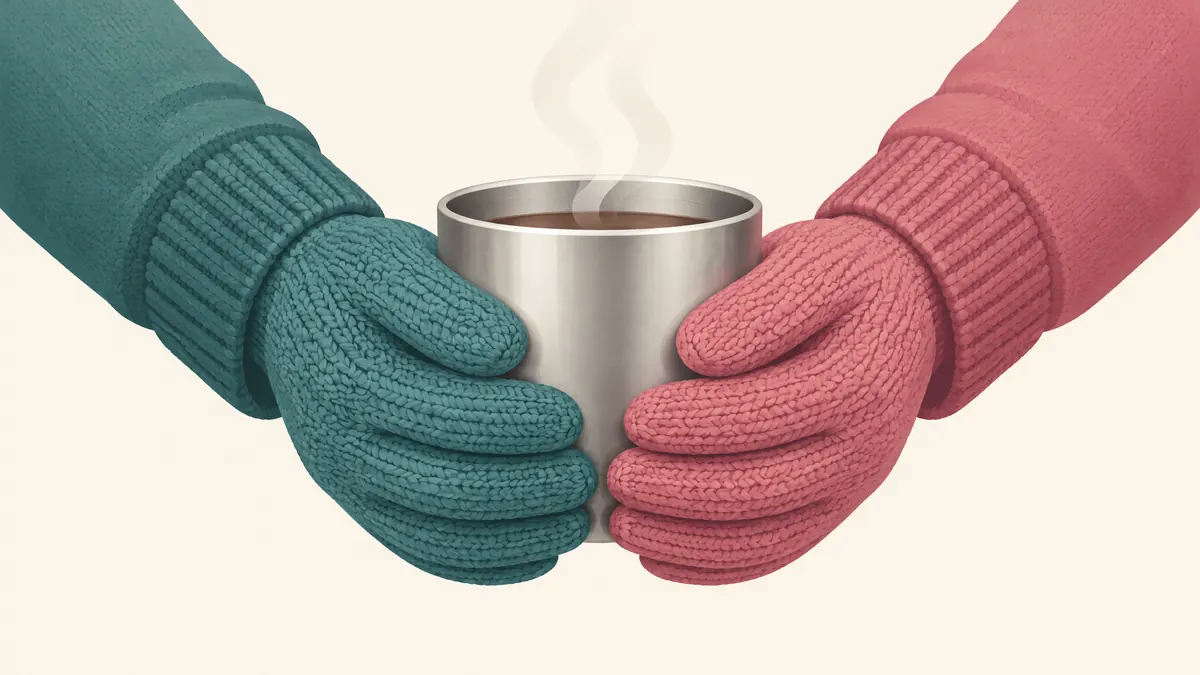
Cold is the commonest trigger. Steps that help (NIAMS unless stated):
Keep your core as well as your hands and feet warm: layers, a hat, gloves or hand warmers, and gloves for cold or frozen items (Arthritis UK).
In an attack, put your hands or feet in warm (not hot) water or tuck your hands under your armpits; do not rewarm too fast (Arthritis UK).
Do not smoke or vape. The NHS says too much caffeine may trigger attacks.
Ask your doctor about medicines: some decongestants, blood pressure medicines (beta blockers), migraine medicines and stimulants can bring on attacks. Do not stop any unless told to (Arthritis UK).
Manage stress, exercise, and treat cracks or sores promptly.
Can these conditions overlap with lupus or myositis?
Yes. Scleroderma can occur with lupus or polymyositis (muscle inflammation), called overlap syndromes (MedlinePlus); DermNet says up to 20% of people with systemic sclerosis have an overlap and develop arthritis, lupus or myositis. See our guide to lupus (SLE). Dr. Krishna Adhikari is first author of a 2023 case report in Clinical Case Reports on dermatomyositis with anti-TIF1 gamma antibodies in an adult woman (PMC record).
कनेक्टिभ टिस्यु रोगहरू: नेपालीमा संक्षेप
कनेक्टिभ टिस्यु (संयोजी ऊतक) भनेको शरीरका तन्तुहरूलाई आकार दिन र बलियो राख्न मद्दत गर्ने ऊतक हो। स्जोग्रेन्स सिन्ड्रोम (स्जोग्रेन्स रोग) र स्क्लेरोडर्मा (छाला कडा हुने बाथ) अटोइम्यून रोग हुन्, जसमा प्रतिरक्षा प्रणालीले गल्तीले आफ्नै शरीरका भागहरूमा आक्रमण गर्छ। Raynaud रोग (रेनाउड रोग) रक्तनलीहरू साँघुरो हुने समस्या हो र यी रोगहरूसँग जोडिएको हुन सक्छ।
स्जोग्रेन्स सिन्ड्रोममा आँसु र र्याल बनाउने ग्रन्थीहरूलाई प्रतिरक्षा प्रणालीले आक्रमण गर्छ, जसले गर्दा मुख र आँखा सुख्खा हुन्छ। स्क्लेरोडर्मामा छाला कडा हुन्छ; यसले फोक्सो, मुटु, मृगौला र खानाको नलीमा पनि असर गर्न सक्छ। Raynaud रोगमा चिसो हुँदा वा तनाव हुँदा औंलाका रक्तनलीहरू साँघुरो हुन्छन्, र औंला सेतो र निलो हुन्छ; रगतको प्रवाह फिर्ता हुँदा छाला रातो हुन्छ। प्राथमिक Raynaud को कारण थाहा छैन; माध्यमिक Raynaud अन्य रोग वा केही औषधिको कारणले हुन्छ। निदानका लागि डाक्टरले लक्षणबारे सोधेर र जाँचेर हेर्नुहुन्छ; रगत जाँच पनि गरिन सक्छ। रगत जाँचले मात्र रोग पक्का हुँदैन।
औंलाका टुप्पामा घाउ आएमा, सास फेर्न गाह्रो भएमा वा खाना निल्न गाह्रो भएमा समयमै चिकित्सकको सल्लाह लिनुपर्छ। स्क्लेरोडर्मामा रक्तचाप बढी भएमा तुरुन्तै डाक्टरलाई देखाउनुहोस्। चिसोमा औंला र शरीरलाई न्यानो राख्ने गर्नुहोस्। बाथ रोग विशेषज्ञ (रुमाटोलोजिस्ट)लाई देखाउनुहोस्।
When to see a rheumatologist
Warning signs first. Go to an emergency department straight away for severe difficulty breathing (gasping, or unable to speak), a tight or heavy chest, or blue or grey lips or skin (NHS). See a doctor as soon as possible for ulcers or black areas on the fingers or toes, a colour change that does not go away as quickly as usual (Arthritis UK), a Raynaud's attack that lasts for hours or does not ease with rewarming (ACR), or a sore that does not heal or becomes infected (MedlinePlus). With scleroderma, call your doctor right away if your blood pressure is higher than usual, and tell your doctor about a new headache, shortness of breath, a dry cough or swollen feet (NIAMS).
See a doctor too for dry eyes and a dry mouth that affect daily life (NHS), skin that is getting thicker or trouble swallowing (MedlinePlus), or Raynaud's that fits the NHS checking points above. Consider asking for a rheumatologist's opinion: NIAMS says rheumatologists primarily treat Sjögren's disease and Raynaud's phenomenon and that most people with scleroderma see one.
Rheumatology care in Kathmandu Valley
Rheumatology care at Tulsi Multi Speciality Clinic is provided by Dr. Krishna Adhikari, consultant rheumatologist and Lecturer in Internal Medicine at Patan Academy of Health Sciences (Patan Hospital), NMC No. 13049. He consults Sunday to Friday from 4:00 PM at AVM Chowk, Manbhawan, Lalitpur-5, Kathmandu Valley. See our rheumatology service and Dr. Krishna Adhikari's profile, book an appointment, or call +977-1-5914294. This article is general information, not a substitute for a consultation.
Sources
Rheumatology care at Tulsi Multi Speciality Clinic · Dr. Krishna Adhikari, consultant rheumatologist
To see a doctor, book online, call +977-1-5914294 or message the clinic on WhatsApp.