
Autoimmune Diseases (अटोइम्युन रोग): Meaning in Nepali
By Dr. Krishna Adhikari, Consultant Rheumatologist
MBBS, MD (Internal Medicine), Fellowship in Clinical Rheumatology
Autoimmune disease in Nepali is अटोइम्युन रोग (also spelt अटोइम्यून रोग): a disease in which the immune system, which normally protects the body from germs, attacks the body's own healthy tissue by mistake (MedlinePlus). In Nepali: शरीरको रोग प्रतिरोधात्मक प्रणालीले आफ्नै स्वस्थ तन्तुलाई आक्रमण गर्छ। There are more than 80 types, you cannot catch one from another person, and several of them, such as lupus (लुपस) and rheumatoid arthritis (रुमाटोइड आर्थराइटिस), are looked after by rheumatologists.
For bath rog (बाथ रोग) in general, see our bath rog guide.
What is an autoimmune disease, and how does the immune system attack the body?
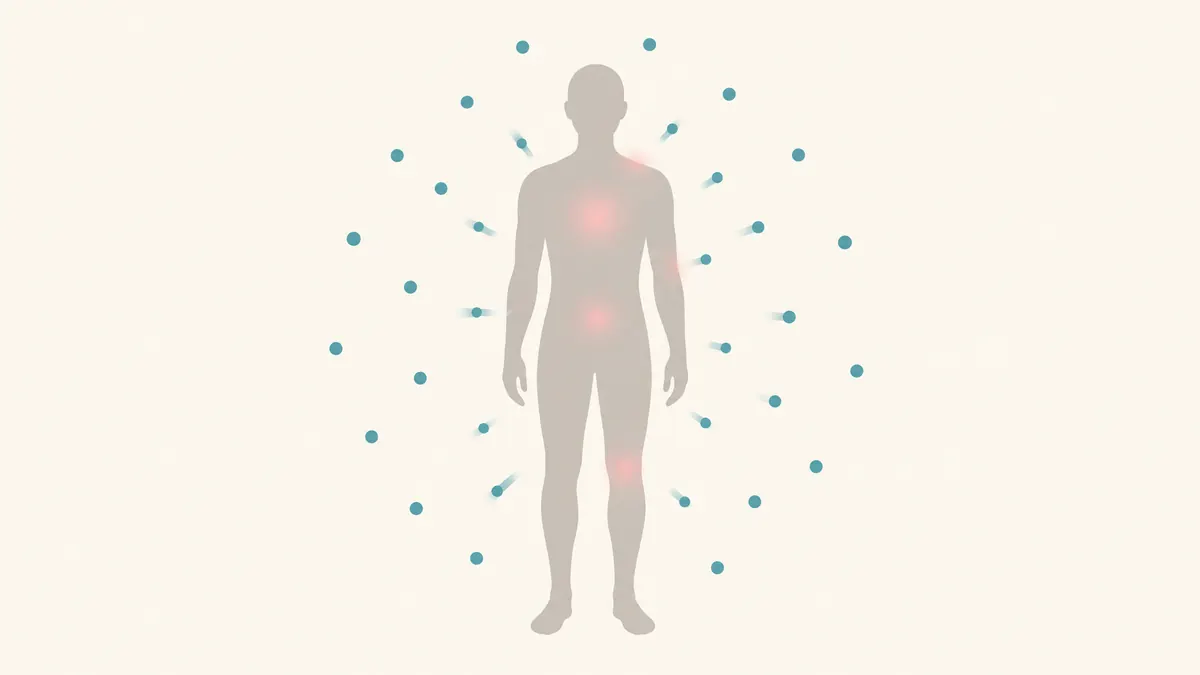
Your immune system protects you by attacking germs such as viruses and bacteria, and can tell they are not part of you. In an autoimmune disease it attacks the healthy cells of your organs and tissues by mistake (MedlinePlus). Proteins called autoantibodies target the body's own healthy tissues and signal the body to attack them (NIAMS).
No one is sure why this happens. These diseases tend to run in families, and viruses, certain chemicals and other things in the environment may trigger one in a person who already has the genes for it (MedlinePlus). Many types cause redness, swelling, heat and pain, the signs of inflammation (सुजन); see our guide to inflammation and stiffness in Nepali. Women develop many types much more often than men (MedlinePlus).
Which autoimmune and immune-related diseases does a rheumatologist see?
The main ones, with links to the full guides:
Rheumatoid arthritis (रुमाटोइड आर्थराइटिस): the immune system attacks the cells that line the joints, often first in the small joints of the hands and feet (NHS). See rheumatoid arthritis in Nepali.
Lupus (लुपस; systemic lupus erythematosus): can affect the skin, joints, heart, lungs, kidneys, blood cells and brain (NIAMS). See lupus in Nepali.
Ankylosing spondylitis (एन्काइलोजिङ स्पोन्डिलाइटिस, ढाडको बाथ): long-term inflammation of the spine. The cause is not known; the HLA-B27 gene variant is linked to it (NHS), and Arthritis UK says it is thought the HLA-B27 protein may lead the immune system to release chemicals that cause inflammation. See ankylosing spondylitis in Nepali.
Psoriatic arthritis (सोरियाटिक आर्थराइटिस): joint pain, swelling and stiffness in some people with psoriasis, a skin condition; like psoriasis, it is caused by the immune system attacking healthy tissue. Joint symptoms that keep coming back need checking even if you have no psoriasis (NHS).
Sjögren's syndrome: the immune system attacks the glands that make fluid, causing dry eyes and a dry mouth (NHS). See Sjögren's syndrome.
Scleroderma: autoimmune conditions that cause hard, thickened areas of skin and sometimes affect internal organs (NHS). See scleroderma.
Not every bath rog is autoimmune: osteoarthritis comes from cartilage breaking down, and gout from too much uric acid in the blood (NHS). See osteoarthritis of the knee and gout and uric acid.
Other specialities see autoimmune diseases too: in type 1 diabetes the immune system attacks the pancreas (MedlinePlus), and in inflammatory bowel disease it is thought to attack the bowel (NHS).
What are the common symptoms?
The symptoms depend on the part of the body affected. Common ones are tiredness (fatigue), fever, a general ill feeling, joint pain and a rash (MedlinePlus).
Symptoms often come and go: they may become severe in a flare-up, and get better or disappear for a period in remission (MedlinePlus). Many autoimmune diseases have similar symptoms, and some, such as muscle aches, are common in many other illnesses (MedlinePlus), so symptoms alone often cannot tell you which disease you have.
How is an autoimmune disease diagnosed?
MedlinePlus says there is usually no single test for a particular autoimmune disease, and it can take a long time, and visits to different types of doctors, to get a diagnosis. The doctor asks about your symptoms and health history, examines you, and may order blood tests and sometimes imaging (Cleveland Clinic).
Tests may include antinuclear antibody (ANA) and other autoantibody tests, a complete blood count, ESR, CRP and a urine test (MedlinePlus Medical Encyclopedia). Three you may see on a rheumatology report:
ESR and CRP help measure inflammation (NHS), but other illnesses also cause inflammation (MedlinePlus), so a result alone does not name the disease. See ESR and CRP blood tests.
ANA looks for antibodies that bind to the body's own tissues. It is often done when lupus is suspected, but a positive ANA is not enough to make a diagnosis (MedlinePlus). See the ANA section of our lupus guide.
Rheumatoid factor and anti-CCP are made by the immune system; no blood test can prove or rule out rheumatoid arthritis on its own (NHS). See RA factor and anti-CCP test.
Share your family health history with your doctor, and keep notes on your symptoms, how long they last and what makes them better or worse (MedlinePlus).
Can autoimmune diseases be cured, or only managed?
For most there is no cure, but many can be controlled. NIEHS says most of these diseases have no cure and some need lifelong treatment to ease symptoms; MedlinePlus says most are chronic (long-lasting) but many can be controlled with treatment. Some go into remission, a long period between flares, which is not the same as a cure (Cleveland Clinic).
It differs by disease. For rheumatoid arthritis the NHS says there is no cure, but early diagnosis and suitable treatment let many people have months or even years between flares. Some types of scleroderma may eventually improve on their own, while others can lead to severe and life-threatening problems (NHS).
Medicines that suppress the immune system can have serious side effects, such as a higher risk of infection (MedlinePlus), so they need a doctor's supervision: do not start, change or stop any medicine without your doctor's advice. Do not start steroid tablets, unlabelled tablets or herbal ‘bath’ powders without a doctor.
Which doctor treats autoimmune diseases?
It depends on the part of the body affected. The Office on Women's Health lists a rheumatologist (बाथ रोग विशेषज्ञ) for arthritis and rheumatic diseases such as scleroderma and lupus, an endocrinologist for diabetes, a gastroenterologist for inflammatory bowel disease, a dermatologist for skin diseases such as psoriasis and a nephrologist for kidney inflammation caused by lupus. MedlinePlus advises seeing the specialist who deals with the symptoms that bother you most. For arthritis and other rheumatic diseases, that is a rheumatologist; see our rheumatology service.
अटोइम्युन रोग: नेपालीमा संक्षेप
अटोइम्युन रोग भनेको शरीरको रोग प्रतिरोधात्मक प्रणालीले आफ्नै स्वस्थ तन्तुलाई आक्रमण गर्ने रोग हो। धेरै अटोइम्युन रोग लामो समयसम्म रहन्छ। अटोइम्युन रोग सरुवा रोग होइन। ८० भन्दा बढी प्रकारका अटोइम्युन रोग छन्। बाथ रोग विशेषज्ञ (रुमाटोलोजिस्ट) ले हेर्ने रोगमा रुमाटोइड आर्थराइटिस, लुपस र सोरियाटिक आर्थराइटिस पर्छन्। टाइप १ मधुमेह पनि अटोइम्युन रोग हो, तर यसलाई अरू डाक्टरले हेर्छन्।
मुख्य लक्षणहरू: थकान, ज्वरो, जोर्नी दुख्ने र सुन्निने, छालामा दाग। लक्षणहरू कहिले बढ्छन्, कहिले कम हुन्छन्। डाक्टरले लक्षण, शारीरिक जाँच र रगत जाँच (इएसआर, सीआरपी, ANA) हेरेर निदान गर्छन्। ANA जाँच पोजिटिभ आउँदैमा लुपस भएको हुँदैन। कुनै एउटा जाँचले मात्र रोग छ वा छैन भनेर पक्का गर्न सक्दैन।
धेरै अटोइम्युन रोग पूर्ण रूपमा निको हुँदैन, तर उपचारले रोगलाई नियन्त्रणमा राख्न मद्दत गर्छ। डाक्टरको सल्लाहबिना औषधि नछोड्नुहोस्। जोर्नी दुख्ने र सुन्निने समस्या ठीक नभएमा चाँडै बाथ रोग विशेषज्ञ (रुमाटोलोजिस्ट) लाई देखाउनुहोस्। कुनै जोर्नी अचानक धेरै दुखेर सुन्निएको, तातो वा रातो भएको छ, वा जोर्नी दुख्दा ज्वरो आएको छ भने तुरुन्तै डाक्टरलाई देखाउनुहोस्। सास फेर्न नसकेमा वा धेरै कडा दुखाइ भएमा तुरुन्तै नजिकको अस्पतालको इमर्जेन्सीमा जानुहोस्।
When to see a rheumatologist
Warning signs first. Get medical care the same day (at a hospital emergency department if you cannot see a doctor quickly) for joint pain with hot, red or swollen skin around the joint (redness can be harder to see on brown and black skin); severe pain and swelling in just one joint that started suddenly; pain that does not get better with painkillers; sore joints with a high or low temperature or feeling hot, cold or shivery; sore joints with conjunctivitis (a red, sore eye) or sore eyes and problems with your vision; or sore joints with pain when passing urine, discharge from the penis or vagina, or a rash or sores on the genitals (NHS). Go to a hospital emergency department straight away for trouble breathing, severe chest pain or pressure, a sudden and unusually severe headache, sudden weakness, dizziness that does not stop, or pain so severe you cannot stand it (Cleveland Clinic).
See a doctor for unexplained joint pain, swelling or stiffness that does not go away in a few days, stiffness for more than 30 minutes after waking, or pain that has not improved after 2 weeks of home care (NHS), and for any new symptom you cannot explain, especially one that affects your usual activities (Cleveland Clinic). If you already have a diagnosis, tell your doctor when treatment seems to work less well or symptoms come back more often (Cleveland Clinic).
In the UK, a doctor who suspects rheumatoid arthritis, psoriatic arthritis or ankylosing spondylitis refers the person to a rheumatologist (NHS). For rheumatoid arthritis the NHS says a quick diagnosis matters, because early treatment can prevent it getting worse and reduce the risk of joint damage.
Rheumatology care in Kathmandu Valley
Rheumatology care at Tulsi Multi Speciality Clinic is provided by Dr. Krishna Adhikari, consultant rheumatologist and Lecturer in Internal Medicine at Patan Academy of Health Sciences (Patan Hospital), NMC No. 13049. He consults Sunday to Friday from 4:00 PM at AVM Chowk, Manbhawan, Lalitpur-5, Kathmandu Valley. See our rheumatology service and Dr. Krishna Adhikari's profile, book an appointment, or call +977-1-5914294. This article is general information, not a substitute for a consultation.
Sources
Rheumatology care at Tulsi Multi Speciality Clinic · Dr. Krishna Adhikari, consultant rheumatologist
To see a doctor, book online, call +977-1-5914294 or message the clinic on WhatsApp.