
Osteoarthritis of the Knee (घुँडाको बाथ): Symptoms and Treatment
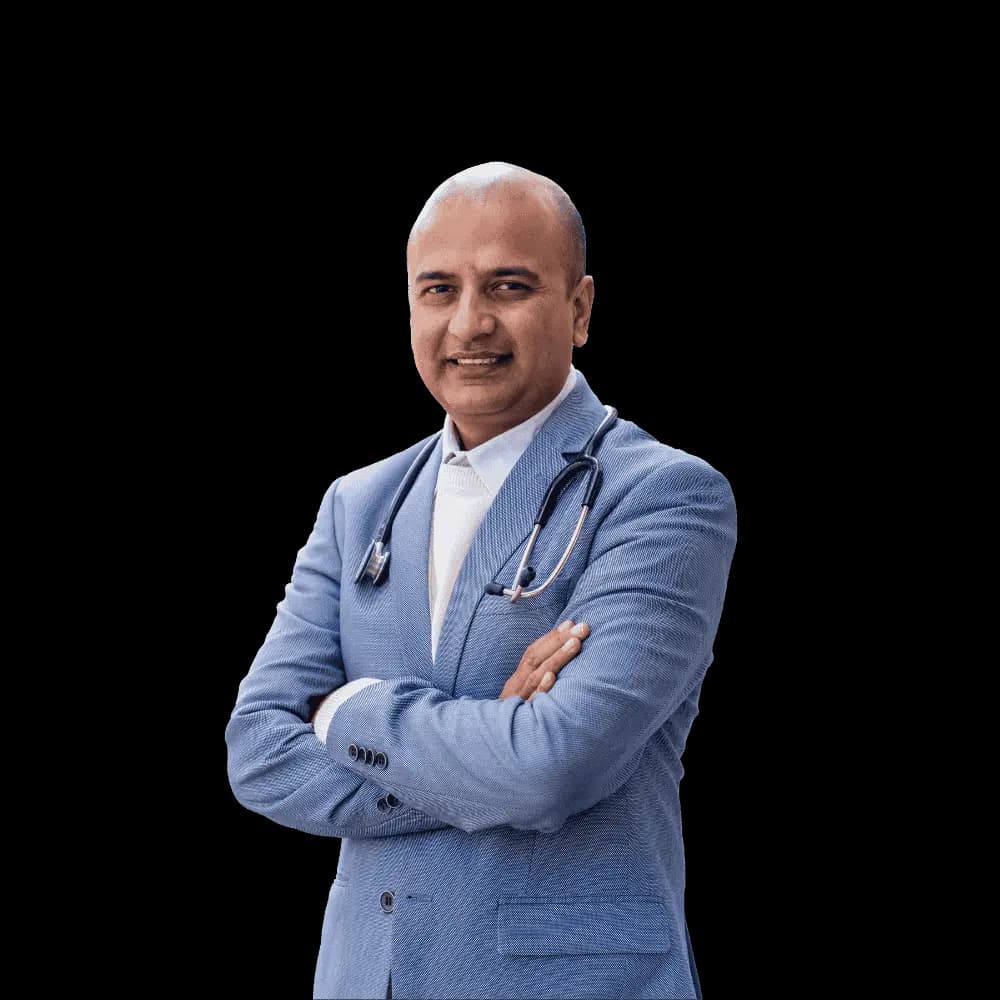
By Dr. Krishna Adhikari, Consultant Rheumatologist
MBBS, MD (Internal Medicine), Fellowship in Clinical Rheumatology
Awaiting medical review: this new article has not yet been checked by Dr. Krishna Adhikari. It will be updated after his review.
Osteoarthritis (OA), in Nepali ओस्टियोआर्थराइटिस, is the most common type of arthritis: the tissues in a joint break down over time. It is commonly called जोर्नी खिइने समस्या and, for the knee, घुँडाको बाथ. In the knee it causes pain that is often worst on walking, especially up or down hills and stairs, and stiffness that usually wears off within half an hour. There is no cure, but exercise, weight management and medicines can ease the symptoms, and its effect on daily life varies from person to person.
What is osteoarthritis of the knee (घुँडाको बाथ)?
OA affects the whole joint, not only the cartilage: NIAMS, a US health institute, lists cartilage, tendons and ligaments, the joint lining, bone and, in the knee, the meniscus.
The Kathmandu Post notes that the name Jorni Khiyine (जोर्नी खिइने) means "wear and tear", which can make OA sound inevitable and rest seem safer than movement. But NIAMS says OA does not happen because of simple wear and tear, and lists exercise among the first steps of treatment. OA is one kind of बाथ रोग (bath rog).
What are the symptoms of knee osteoarthritis?
Symptoms often begin slowly (NIAMS). In the knee:
Pain with use, worst when you walk, particularly up or down hills or stairs; it may ease with rest (UK NHS; NIAMS).
Stiffness (जोर्नी कडा हुनु) after rest or in the morning, usually under 30 minutes, which makes the joint hard to move (NIAMS, NHS).
Swelling in and around the knee, especially after a lot of activity (NIAMS).
Grinding or grating sounds, and giving way when weak muscles and ligaments let the knee buckle (NIAMS, NHS).
Symptoms come and go in episodes (NHS). OA also affects the hands, hips, neck and lower back (NIAMS).
Who gets knee osteoarthritis, and what raises the risk?
OA is more common in older people and in women, especially after age 50 (NIAMS). Being overweight, a past injury or surgery to the joint, repetitive overuse, and a family history also make it more likely (NIAMS).
In Nepal, a single-hospital study at Tribhuvan University Teaching Hospital reviewed 200 knee X-rays taken for knee pain with no known cause and found OA changes in 59%; OA was more common in women and in people aged 50 and over (Journal of the Institute of Medicine Nepal, 2016).
Osteoarthritis or rheumatoid arthritis: how do they differ?
Both can hurt the knees, but they are different diseases.
Osteoarthritis (OA)
The tissues in the joint break down over time (NIAMS); it mostly affects people over 45 (Arthritis UK).
Pain worsens with use and eases with rest; morning stiffness usually wears off within 30 minutes (NHS).
Rheumatoid arthritis (RA)
An autoimmune disease: the immune system attacks the body's own tissues, mainly the joints (NIAMS).
Often starts in the small joints of the hands and feet; morning stiffness often lasts longer than 30 minutes (NHS).
Tiredness, a high temperature or weight loss may come with it (NHS).
A high ESR or CRP blood test result, with other clues, helps diagnose it (Arthritis Foundation); see our guide to ESR and CRP blood tests.
The knee alone does not settle it: OA of the knee usually ends up in both knees unless an injury or another condition affected only one (NHS), and RA often affects the same joint on both sides (NIAMS). One does not exclude the other: OA can develop in a joint already damaged by RA or gout (NHS). For RA, see our guide to rheumatoid arthritis.
How is knee osteoarthritis diagnosed? Do I need an X-ray or MRI?
There is no single test for OA (NIAMS). NICE, the UK guideline body, advises diagnosing it from your history and an examination, without imaging, if you are 45 or over, have activity-related joint pain, and have no morning stiffness or stiffness lasting no longer than 30 minutes. It advises against routine imaging unless something is atypical, such as a recent injury, a hot swollen joint or concern about infection or cancer. X-rays can show loss of joint space and bone spurs, though early damage does not usually appear; MRI generally helps when a joint locks or gives way. Blood tests (not usually necessary) and joint-fluid samples can rule out other causes such as RA, infection or gout (NHS, NIAMS).
Not all knee pain is OA: the NHS also lists sprains, torn ligaments, bursitis, gout and septic arthritis. Gout usually affects the big toe but can affect the knee (NHS); see our guide to gout and uric acid.
Are there stages or grades of osteoarthritis?
The guidelines we cite do not divide OA into numbered stages. Knee X-rays are often graded from 0 to 4 on the Kellgren-Lawrence scale, the most widely used X-ray grading (grade 3: definite narrowing of the joint space, moderate bone spurs, possible deformity of the bone ends), but it is meant to be used with a clinical assessment (Kohn et al., 2016). NICE says care should follow symptoms and physical function, and the Kathmandu Post notes that symptoms do not always match what an X-ray shows.
How is knee osteoarthritis treated?
This describes options a doctor may use; it is not advice to take any medicine. NICE names therapeutic exercise and weight management (where appropriate) as the core treatments, and the American College of Rheumatology (ACR) says decisions should be shared between you and your doctor.
Exercise, physiotherapy and weight
Exercise is one of the most important treatments (NHS), and the ACR strongly recommends it for knee OA. NICE advises tailored exercise, such as strengthening and aerobic fitness; pain may rise at first, but regular exercise benefits the joints. Walking is one of the low-impact options NIAMS lists. Ask a doctor or physiotherapist for a plan: too much too quickly, or the wrong kind, may damage the joints (NHS). Extra weight strains the knees (NHS); NICE says any weight loss is likely to help, and losing 10% of body weight is likely to be better than 5%.
Pain-relief medicines
NICE advises using any medicine alongside exercise, for the shortest time that helps.
NSAID (non-steroidal anti-inflammatory drug) creams or gels come first for the knee (NICE, ACR).
NSAID tablets may be considered if creams fail, with a stomach-protecting medicine (NICE); the ACR also strongly recommends them. They can harm the stomach, kidneys, liver and heart, especially in older people or alongside other illnesses or medicines (NICE), and may not suit people with asthma, a stomach ulcer, angina, or a past heart attack or stroke (NHS), so take them only as a doctor advises.
Paracetamol: guidelines differ. NICE says not to offer it routinely, only now and then for short-term pain when other medicines cannot be used or have not worked, and that there is no strong evidence of benefit; the NHS says many people find it works poorly; the ACR conditionally recommends it.
Opioid painkillers are generally not advised: NICE says not to offer strong opioids, whose risks outweigh the benefits, and not to offer weak opioids routinely; the 2026 ACR summary conditionally advises against opioids.
Injections
Steroid injections into the knee may be considered when other medicines have not helped or are unsuitable, or to support exercise (NICE). They give only short-term relief (NICE: 2 to 10 weeks; NHS: weeks or months). The ACR strongly recommends them for knee OA. Hyaluronic acid injections are sometimes recommended for the knee (NIAMS, reviewed 2023), but NICE advises against them and the 2026 ACR summary conditionally advises against them.
When is surgery considered?
Surgery is needed in only a small number of cases, and the NHS refers people who need it to an orthopaedic surgeon. NICE says to consider referral for joint replacement when symptoms substantially affect quality of life and non-surgical care is ineffective or unsuitable, whatever the person's age, sex or weight. NICE advises against keyhole (arthroscopic) washout or clean-out of the knee (lavage or debridement) for osteoarthritis. The NHS says surgery may greatly improve symptoms but cannot be guaranteed to remove them.
PRP, stem cells and supplements: what do the guidelines say?
You may hear about platelet-rich plasma (PRP) or stem-cell injections, or supplements said to regrow cartilage. The 2026 ACR guideline update (summary approved 8 September 2026; full paper to follow) strongly recommends against PRP and stem-cell injections for knee and hip OA, and against glucosamine and chondroitin. NICE advises against glucosamine, and the NHS finds no strong evidence for it or for chondroitin.
What can I do at home to ease knee pain?
Keep moving and pace yourself: too much rest can increase stiffness and weaken muscles, and doing too much on a good day can mean more pain later (Arthritis UK).
Take load off the knee: a walking stick in the hand opposite the sore leg and shock-absorbing soles can help (NHS). Guidelines differ on braces and insoles (NICE, ACR), so ask a physiotherapist.
There is no special diet for OA (Arthritis Foundation); aim for a healthy weight.
Can osteoarthritis be cured or reversed?
No. The NHS says OA cannot be cured, and the Kathmandu Post notes that no approved treatment reverses it. Sources differ on its course: the NHS says it does not necessarily get worse, MedlinePlus says it usually worsens slowly, and NIAMS says it can worsen quickly in some people. Be careful with anything that promises a cure or regrown cartilage, and ask your doctor before stopping or starting any medicine.
ओस्टियोआर्थराइटिस (घुँडाको बाथ): नेपालीमा संक्षेप
ओस्टियोआर्थराइटिस (घुँडाको बाथ) बाथ रोगको एक सामान्य प्रकार हो, जसमा जोर्नीभित्रका भागहरू (कार्टिलेज सहित) बिस्तारै बिग्रँदै जान्छन्; यसलाई जोर्नी खिइने समस्या पनि भनिन्छ। यो उमेर बढ्दै जाँदा बढी देखिन्छ, विशेषगरी ५० वर्षपछिका महिलामा। घुँडामा हिँड्दा, भर्याङ चढ्दा वा ओर्लिँदा दुख्ने, आराम गरेपछि वा बिहान जोर्नी कडा हुने (प्रायः ३० मिनेटभन्दा कम), जोर्नी सुन्निने, र चलाउँदा कटकट वा खसखस आवाज आउने यसका मुख्य लक्षण हुन्। समयसँगै प्रायः दुवै घुँडा प्रभावित हुन्छन्। रुमाटोइड आर्थराइटिसमा भने बिहान जोर्नी कडा हुने अवस्था प्रायः ३० मिनेटभन्दा बढी रहन्छ, र थकान वा ज्वरो पनि हुन सक्छ। निदानका लागि डाक्टरले लक्षणबारे सोधेर र जोर्नी जाँचेर हेर्नुहुन्छ; एक्स-रे वा रगत जाँच सधैं आवश्यक हुँदैन, तर अर्को कारण हो कि भनेर छुट्याउन गरिन्छ। यो रोग पूर्ण रूपमा निको हुँदैन, तर नियमित व्यायाम, फिजियोथेरापी, तौल नियन्त्रण र डाक्टरले दिएको औषधिले दुखाइ कम गर्न मद्दत गर्छन्। जोर्नी खिएको हो भन्ने सोचेर आराम मात्र नगर्नुहोस्; व्यायाम उपचारको मुख्य भाग हो। जथाभाबी औषधि नखानुहोस्, डाक्टरको सल्लाह लिनुहोस्। घुँडा धेरै दुखेमा, सुन्निएमा वा चलाउन नसकिएमा सकेसम्म चाँडो डाक्टरलाई देखाउनुहोस्; घुँडा रातो वा तातो भएर ज्वरो आएमा तुरुन्तै अस्पताल जानुहोस्। घुँडा दुख्ने समस्या केही हप्तामा ठीक नभएमा डाक्टरलाई देखाउनुहोस्; बिहान जोर्नी कडा हुने अवस्था ३० मिनेटभन्दा लामो भएमा बाथ रोग विशेषज्ञ (रुमाटोलोजिस्ट) लाई देखाउनुहोस्।
When to see a rheumatologist
See a doctor if knee pain does not improve within a few weeks (NHS). Consider a rheumatologist if the pattern is not typical OA: morning stiffness over 30 minutes, several joints or small joints of the hands and feet affected, tiredness or weight loss, or rapid worsening (NHS, NICE, Arthritis Foundation). A rheumatologist can diagnose OA and plan treatment (ACR).
Get urgent medical advice the same day if the knee is very painful, you cannot move it or put weight on it, it is badly swollen or has changed shape, or it locks, gives way or painfully clicks (painless clicking is normal). A very high temperature with redness or heat around the knee can be a sign of infection: go to a hospital emergency department straight away (NHS).
Rheumatology care in Kathmandu Valley
Rheumatology care at Tulsi Multi Speciality Clinic is provided by Dr. Krishna Adhikari, consultant rheumatologist and Lecturer in Internal Medicine at Patan Academy of Health Sciences (Patan Hospital), NMC No. 13049. He consults Sunday to Friday from 4:00 PM at AVM Chowk, Manbhawan, Lalitpur-5, Kathmandu Valley. See our rheumatology service and Dr. Krishna Adhikari's profile, book an appointment, or call +977-1-5914294. This article is general information, not a substitute for a consultation.
Sources
Rheumatology care at Tulsi Multi Speciality Clinic · Dr. Krishna Adhikari, consultant rheumatologist
To see a doctor, book online, call +977-1-5914294 or message the clinic on WhatsApp.